Are you planning a feature wall? If you want that wall to truly become the star of the space, you need a lighting scheme that is up to the task. More than any other element, light shapes how we perceive decorative finishes: it sculpts reliefs, softens surfaces, ignites metallic reflections and controls glare. The very same finish can look flat or incredibly vibrant simply by changing the origin, direction or softness of the light.
That’s why, if your project includes textured finishes, marmorino plasters, metallic effects or high-gloss walls, lighting cannot come “after”. It has to be designed together with the finish, as an integral part of a single concept.
In this article, with the help of Leonardo Pelagatti, Color Expert at Cromology Italia and head of the Color Design Center, you’ll find a few simple, practical guidelines to design light and decorative wall finishes in an integrated way, elevating both the visual impact of the walls and the overall spatial experience.
Designing finishes and lighting together
Decorative wall finishes and lighting design are two sides of the same coin. They go hand in hand, and each can enhance the other in a reciprocal way.
As Pelagatti explains: “Light is the first ‘coloured element’ in any project. Even before the hue or the finish, it’s light that decides how a wall will be perceived. If it’s well designed, it enhances the material; if it’s poorly designed, it can completely cancel out its aesthetic value.” For this reason, when you define your concept and palette, it helps to start from a few key questions:
- What role will this wall play? Will it be a neutral backdrop, a scenic backdrop, a focal element?
- How will the light change during the day? How much natural light comes in, from which direction, with which shadows?
- What atmosphere do you want to create? Intimate and cocooning, bright and contemporary, or dramatic and material?
The answers will guide you not only in choosing the desired finish (more or less textured, glossy, satin, metallic) but also in defining the lighting strategy: grazing light, diffuse light, shielded light, accent light, scenographic light… all depend on the final effect the designer wants to achieve.
A well-calibrated lighting design allows you to:
- enhance colour properties;
- bring out the texture and depth of material finishes;
- even out and make smooth surfaces read as “silky”;
- control reflections and glare on glossy walls;
- make metallic and pearlescent effects sparkle in a controlled way.

Grazing light to make thick, textured walls vibrate
When walls are finished with strong textured effects – raised marmorino plasters, lime-based surfaces, sandy effects such as Marmorin Sand or highly material finishes like Moon Craters – the biggest mistake is to flatten the material with generic, frontal, diffuse light.
Your goal, instead, is to make the grain vibrate, emphasise reliefs and trowel marks, and create micro-shadows that bring out the perceived depth of the wall. A few tips:
- Choose grazing light from above or from the ceiling, placing linear light sources close to the wall: grazing light exaggerates shadows and sculpts the surface.
- Consider adjustable tracks or recessed luminaires that allow you to fine-tune the beam on site, especially when you have several textured walls in the same space.
- Pay close attention to colour temperature – it’s one of the most underestimated but decisive factors in enhancing (or compromising) a decorative finish:
- Warm light (2700K–3200K) for earthy finishes, lime plasters, beige, sand and taupe marmorino tones, surfaces designed to convey comfort, intimacy and a soft atmosphere;
- Neutral light (3500K–4000K) for greys, concrete effects and more contemporary moods, minimal interiors, retail spaces and professional environments.
Grazing light turns a textured wall into a living volume, capable of changing appearance throughout the day.
Soft, diffuse light for smooth, velvety, silky walls
With smooth finishes that feel soft to the touch and offer a velvety, silky look – like walls finished with our Silk system – the focus shifts: here you no longer want to highlight relief but rather visual continuity.
In this case, the best solution is a wide, soft, diffuse and preferably indirect light.
- Use ceiling light lines with opal diffusers or cove systems that flood the room with an even glow.
- Integrate wall lights and floor lamps that add soft layers of light without creating overly sharp spots.
- Avoid beams that are too narrow and strong contrasts, as they can make minor imperfections or breaks in continuity more visible.
The result should be a uniform “skin”, wrapped in a veil of light that stages the silky wall not only to the touch, but also to the eye.

Glossy and mirror-like walls: beware of glare
Glossy surfaces have a double nature: they amplify light and reflect everything around them. With high-gloss finishes such as Mithos Lux or mirror-like surfaces like Venetian plasters, lighting control is crucial.
Your goals are to:
- maintain the wall’s brilliance;
- manage reflections in an elegant way;
- avoid unpleasant, blinding hot spots.
In general, the rule is:
- avoid point-like, frontal spotlights: they produce harsh, glaring reflections;
- favour wider, shielded and diffuse sources, able to keep specular reflections under control.
A mix of lights for metallic, pearlescent and sparkling walls
Finishes with metallic, pearlescent or sparkling effects – such as Damascato or other “sparkling” effects with micro points of light embedded in the material – require multi-layered lighting.
The goal is not to illuminate everything in the same way, but to create controlled, elegant and never excessive shimmer.
An effective strategy combines:
- a diffuse, uniform base layer of light that ensures visual comfort, clear reading of the space and consistency;
- targeted accent lighting: spotlights or recessed fixtures with a tighter beam, positioned to hit metallic reflections in a deliberate way.
By playing with angles and intensity, you can create subtle dynamism: the wall changes as people move through the space, animates with movement and becomes scenographic without ever feeling overwhelming.

Enhance decorative wall finishes with light? Three mistakes to avoid
Here are three recurring mistakes that can compromise the final result:
1. Ignoring the impact of natural light
Before choosing luminaires and LED strips, observe how natural light enters the space. Which walls get direct sunlight, and at what times of day? Which walls remain more in the shade? How does the light behave in winter and in summer?
Designing based only on artificial light often leads to unpleasant surprises on site: walls blinded by the sun, unexpected reflections, unplanned shadow areas. Natural light is alive and dramatic: it can range from around 1,000 to over 100,000 lux over the course of a day, radically changing colour temperature from cool to warm, to very warm.
2. Choosing the light only after the finish
Ideally, decorative finishes and wall lighting are designed together, based on the colour, texture and spatial role of the surfaces. Reversing this order means giving up a significant part of the expressive potential of the material.
Think of a wall as you would of a painting in a museum. Would you ever light it in an approximate way?
3. Not aligning colour temperature with the palette
Light that is too cool on a warm finish can dull it, just as light that is too warm can make contemporary greys look yellowish. Aligning colour temperature with the chromatic palette of the finish is a simple step that makes a huge difference.
4. Forgetting about light intensity
Intensity is just as important as colour temperature. If it’s too high, it flattens textures and emphasises defects; if it’s too low, it dulls deep colours and metallic effects. Textured finishes work best with medium intensities, velvety finishes benefit from soft light, while glossy surfaces require carefully controlled levels to avoid glare. Without proper intensity balancing, the perception of the wall is always altered.
Discover Viero Decoratives finishes and start designing in an integrated way
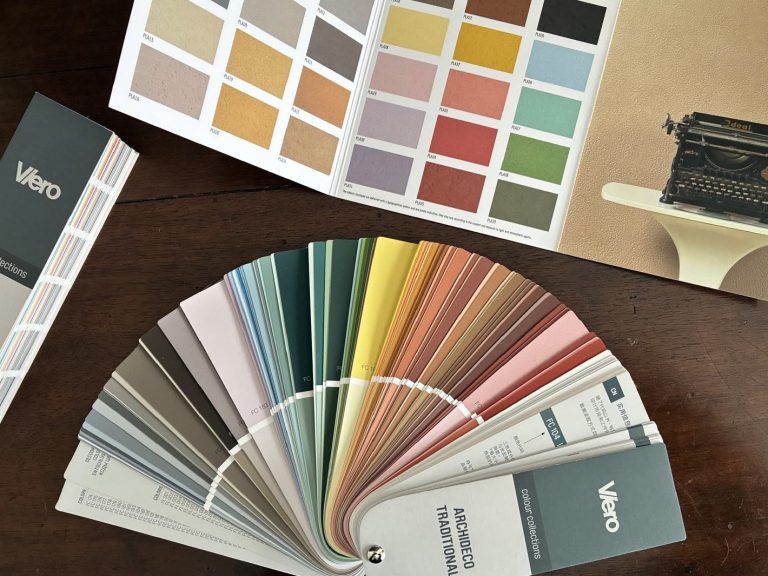
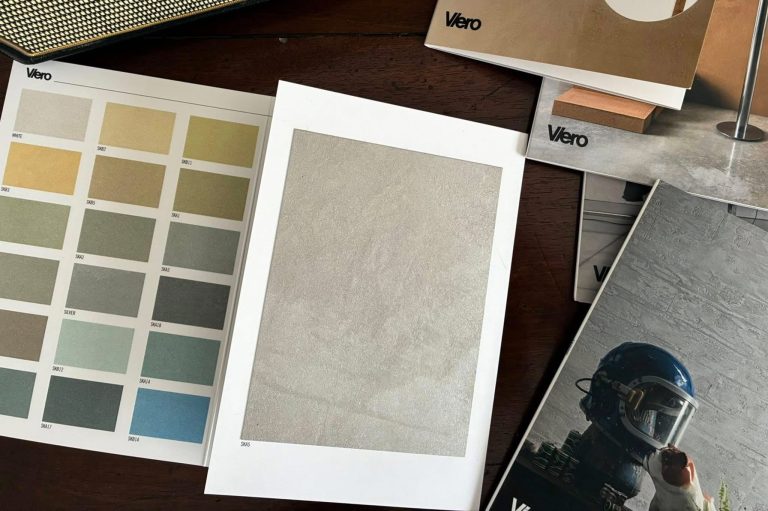
The Viero Decoratives catalogue offers a wide range of decorative wall finishes – textured, velvety, glossy, metallic – designed to work seamlessly with even the most demanding lighting design projects.
Whether you’re designing a hotel, a restaurant, a private residence or a retail space, you can build a true alphabet of surfaces and create narratives that unfold across the creative space of the wall.
Explore all Viero Decoratives finishes in the dedicated section of our website and contact us to discuss the solutions that best suit your projects. Together, we can turn every wall into an unforgettable experience of light and material.