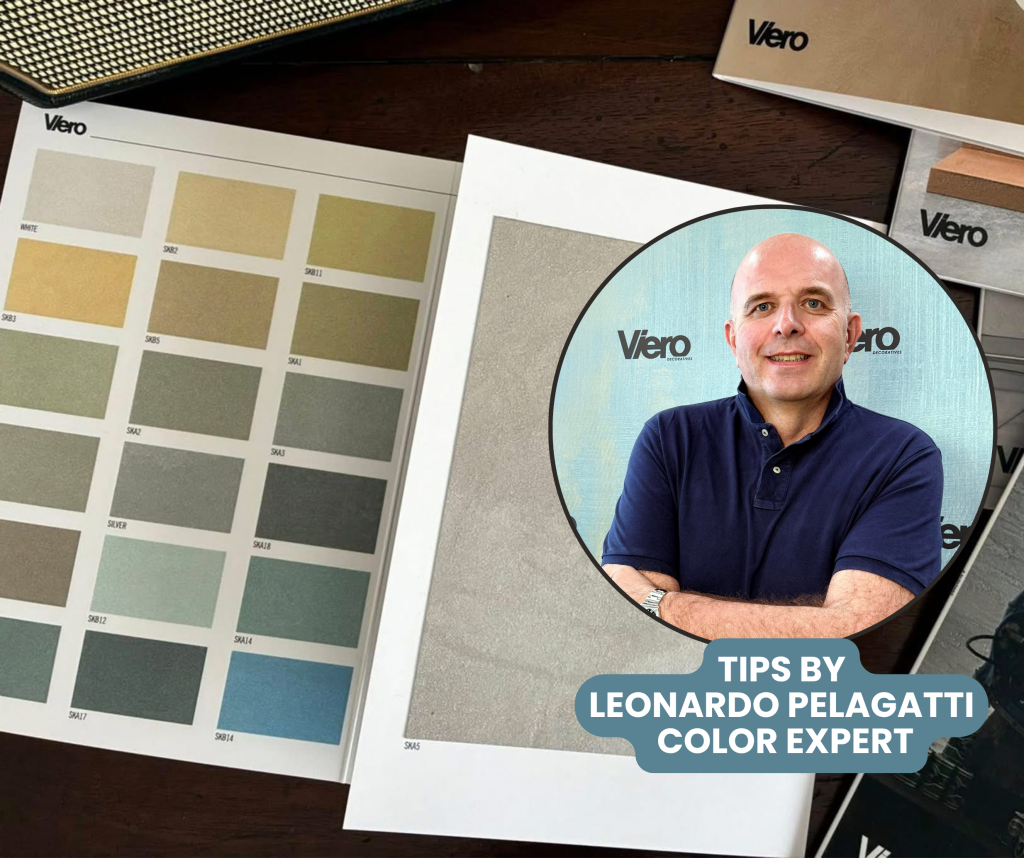
Insights from Leonardo Pelagatti, Color Expert at Viero Decoratives
Decorative surfaces do far more than clad a space. They shape its character, atmosphere, and identity.
In this article, Leonardo Pelagatti, Color Expert at Viero Decoratives, explores the role of colour in contemporary design, moving beyond the notion of colour as a passing trend to reframe it as a strategic design tool—one that exists in continuous dialogue with light, materiality, and architecture.
Beyond Neutrality: Colour Is Never Passive
Contemporary interior design has increasingly embraced the idea of colour as something to be restrained, softened, or neutralised. Greys, beiges, and desaturated palettes havebecome a shared visual language because they feel timeless, versatile, and reassuring.
Yet neutrality is only an illusion.
When working with decorative surfaces, colour is never simply present—or absent. It is always active. Even within restrained palettes, it continuously responds to light, shifts throughout the day, creates depth, or, conversely, flattens spatial perception.
The question, therefore, is not whether to choose neutral or bold colours.
The real question is how colour is constructed.
Decorative Surfaces: Systems That Transform Colour
As in exterior architecture, where colour can never be considered independently from its surroundings, interior colour is always contextual. It is shaped by natural and artificiallight, materiality, the intended use of the space, and the people who inhabit it.
Decorative surfaces intensify this relationship.
They are not passive finishes but dynamic systems that transform colour itself.
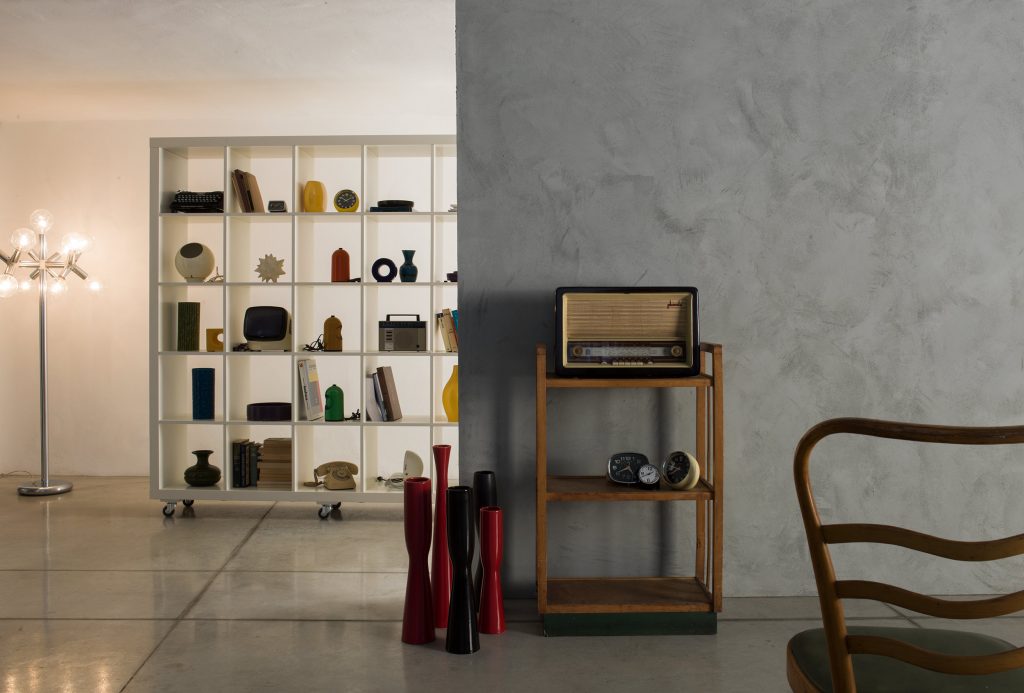
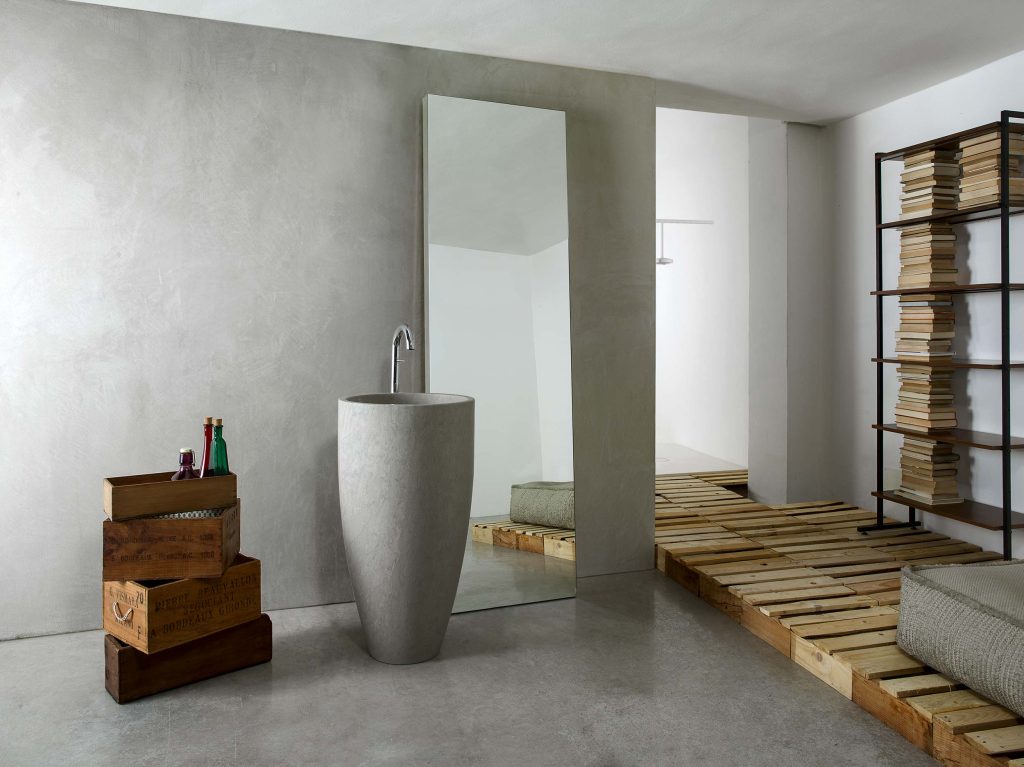
A colour applied to a perfectly smooth surface remains relatively stable. Applied to a textured finish, however, it breaks apart, gains density, becomes lighter in certain areas, vibrates, absorbs light, and reveals unexpected nuances.
Its visual complexity increases.
This is the moment when colour ceases to be a selection and becomes an integral part of the design process.
Colour Trends Versus Design Thinking
Colour trends undoubtedly influence the way we perceive interiors. They shape the imagery we consume every day, establish familiarity, and guide aesthetic preferences.
This is one of the reasons why desaturated palettes have become so widespread: they have evolved into a universally recognised visual reference.
Trends, however, operate through simplification.
They reduce complexity to a limited number of easily reproducible codes.
Design works in exactly the opposite direction.
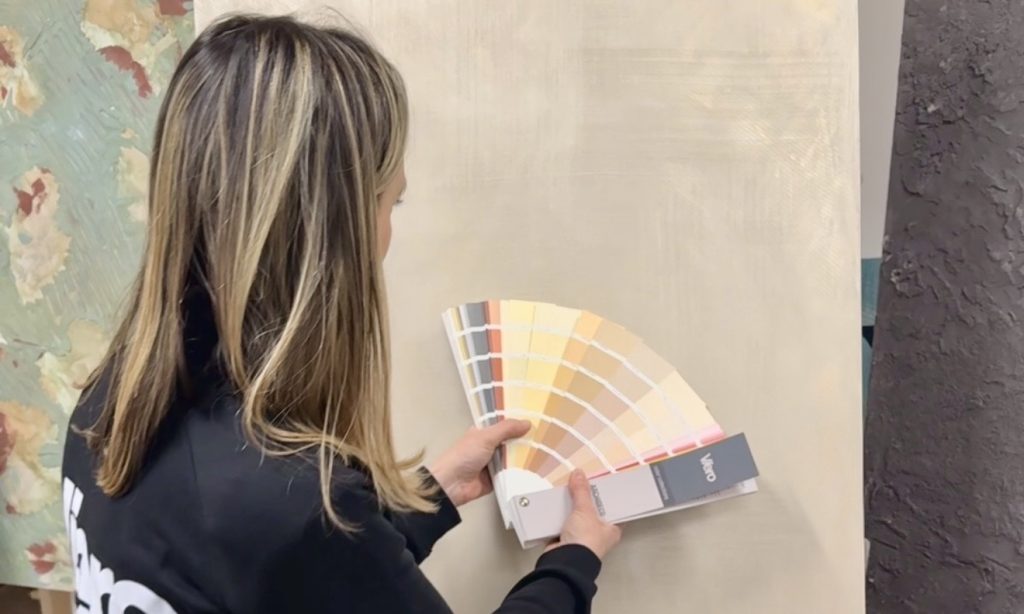
Specifying a decorative surface is never simply about selecting a fashionable colour. It is about constructing relationships: between light and material, space and perception, architecture and everyday experience.
Constructing Colour Through Decorative Surfaces
Relying exclusively on greys and beiges often means overlooking part of colour’s expressive potential. Not because these colours are inherently limited, but because, when adoptedas default solutions, they tend to neutralise differences rather than interpret them.
The objective is not to abandon neutral palettes.
It is to stop considering them the only viable option.
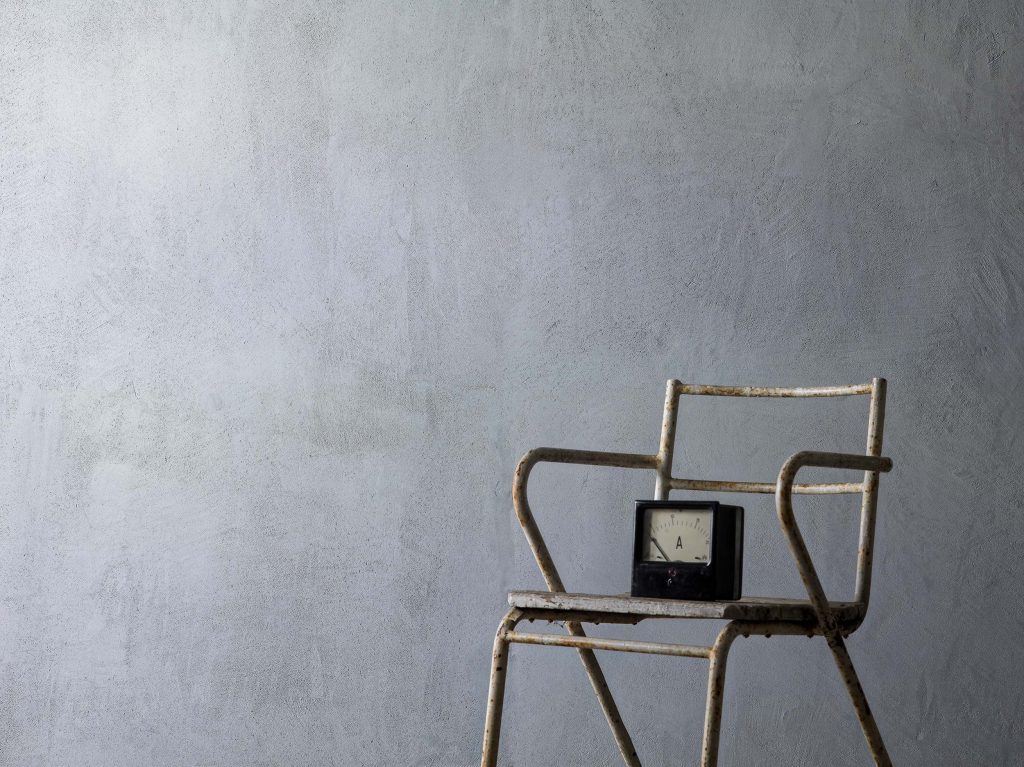
Even the most restrained colour can be richly articulated. It can evolve through subtle tonal variations, almost imperceptible shifts, and delicate layering that only emerges under changing light conditions.
Such surfaces create interiors that are not immediately revealed but gradually unfold over time.
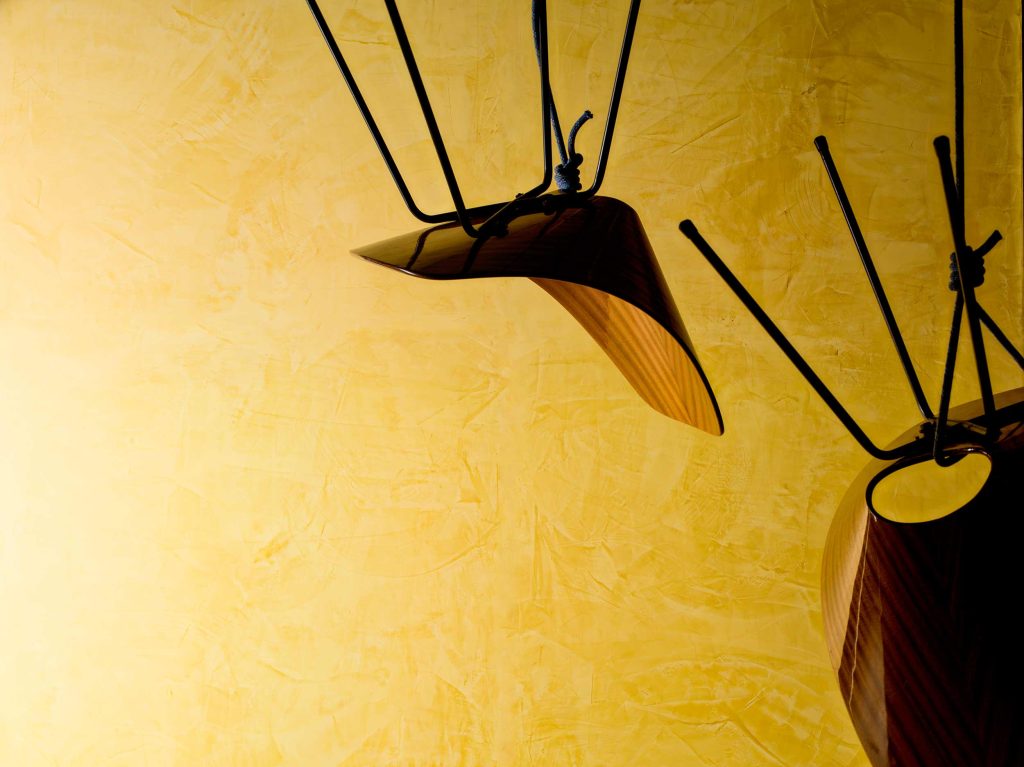
Likewise, more saturated colours can be refined and controlled through texture and materiality. Rather than appearing as flat fields of colour, they become surfaces that absorb, reflect, and modulate light.
This is precisely what decorative finishes make possible.
They do not simply add colour.
They construct it. Designing with color also means anticipating these transformations.
Interior Design Begins with Understanding Space
For this reason, colour trends should always be regarded as a starting point rather than a design solution.
They signal cultural shifts, suggest new directions, and inspire experimentation.
They cannot replace design because they know nothing about the specific project.
They do not account for:
- the quality of natural light;
- the orientation of the space;
- the daily routines of its occupants;
- the material memory and architectural character of the place.
Yet these are precisely the factors that determine how colour will ultimately be perceived.
Colour as a Strategic Design Instrument
Repositioning colour at the centre of the design process means restoring its complexity—not as a purely expressive gesture, but as an operational design tool.
Not merely as an aesthetic decision, but as a means of establishing meaningful relationships between architecture, materiality, light, and human experience.
Moving beyond desaturated monochromes does not necessarily mean introducing more colour.
It means using colour with greater precision.
It means recognising that colour can never be entirely controlled because it lives through changing light, the passing of time, and everyday use.
Precisely for this reason, when thoughtfully designed, colour becomes one of the most sophisticated and powerful tools available for shaping space, atmosphere, and identity.
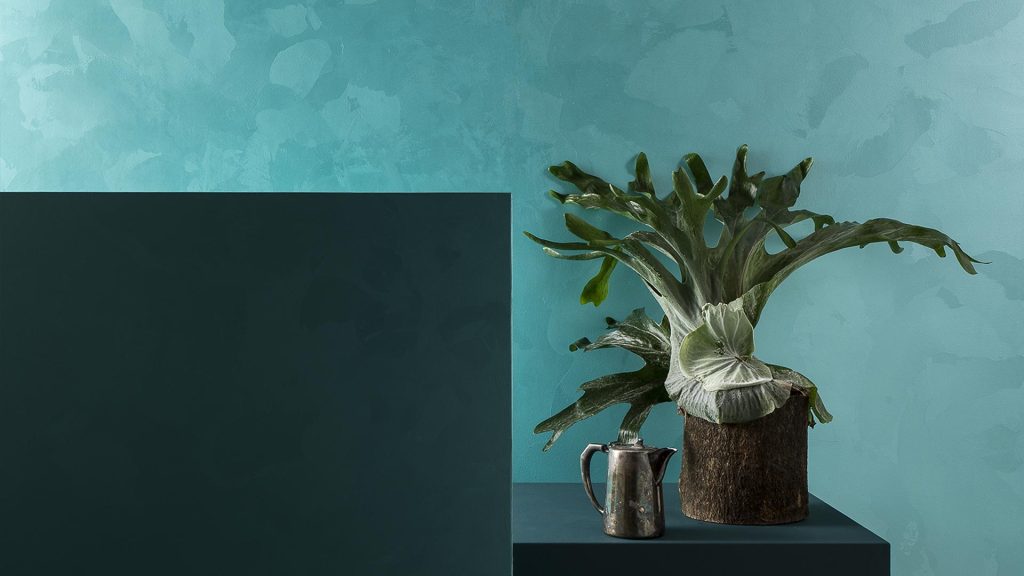
Discover the Viero Decoratives Colour Collection
To further explore the relationship between colour, decorative surfaces, and interior architecture, discover more articles by Leonardo Pelagatti on the Viero Decoratives blog and explore the Viero Decoratives Colour Collection, where chromatic research and decorative finishes come together to inspire new architectural possibilities.